
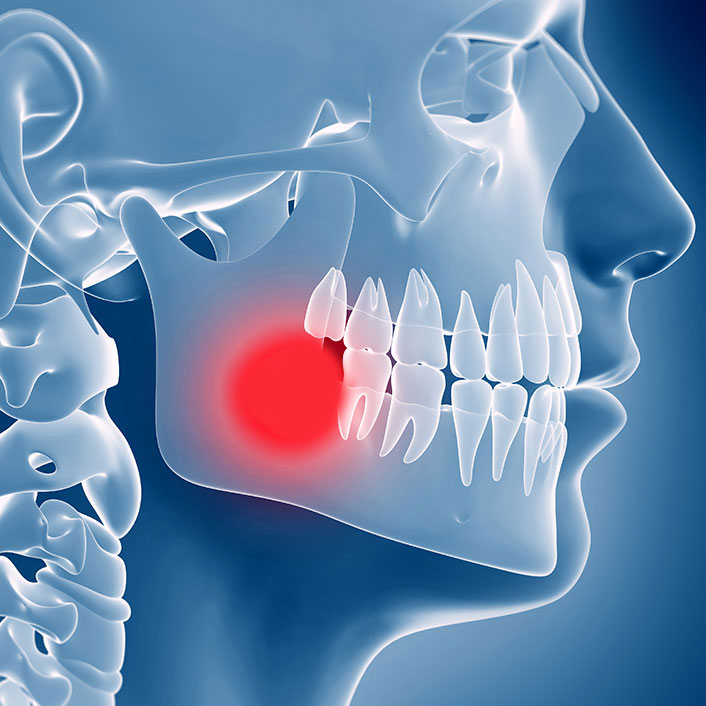
TMJ stands for temporomandibular joint and is used to describe dysfunction or disorders related to the joint. “Temporo,” refers to the temple area of the skull; “mandibular,” refers to the lower jaw; and “joint” is essentially where the head and jaw meet. Problems in this joint may be caused by a trauma, misalignment of the teeth, or excess muscle tension. The two bones that meet at the jaw are buffered by cartilage and five different muscles, so TMJ can cause a variety of troubles.
Common TMJ symptoms:
Headaches
Earaches
Trouble/soreness in opening and closing the mouth
Clicking or popping of the jaw
Pain in the jaw muscles
Soreness in the area, sometimes extending to the face
Dental treatments for the condition can include replacing missing teeth, moving teeth, adjusting the bite, filling gaps between teeth, and more. There is no one solution that is right for all cases. Sometimes a plastic mouthpiece is used to prevent clenching or grinding that is contributing to the problem. If TMJ is left untreated and reaches extremes, surgery may be required to repair the badly damaged joint.
BackYour visit begins with an evaluation of your oral health, concerns and treatment goals. The Carlisle Family Dentistry team can explain whether tmj treatment is appropriate for you and review your options.
That depends on your oral health and individual needs. An examination at our Carlisle office is the best way to determine whether tmj treatment should be part of your treatment plan.
Call Carlisle Family Dentistry at 515-706-2844 or use the website appointment request option. Our team can help arrange the appropriate visit.